The Secret Behind A Perfect Smile: What Happens After Your Impression
You bite down on a tray of putty or sit through a quick digital scan, the appointment ends, and two weeks later you walk out with a crown that fits perfectly.
Author:Dr. Bill ButcherOct 20, 2026
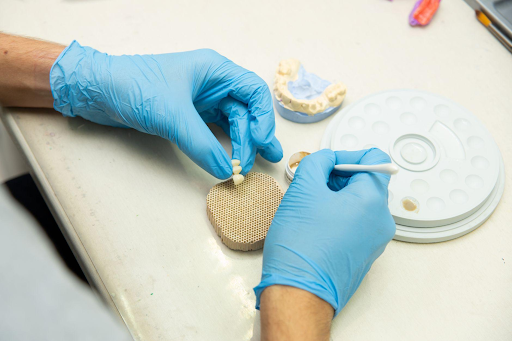
You bite down on a tray of putty or sit through a quick digital scan, the appointment ends, and two weeks later you walk out with a crown that fits perfectly. Most patients never think about the gap between those two moments. That gap is where the real work happens, and it involves technicians, materials science and a level of precision measured in fractions of a millimeter. Understanding the process explains a great deal about why some restorations feel invisible and others never quite settle in.
The Journey Out of the Clinic
Your impression rarely stays in the building. Most clinics send their cases to a dental labthat specializes in building restorations, along with a prescription describing the tooth, the material requested and the shade selected during your appointment. Digital scans travel as a file within minutes, while physical impressions are packed and couriered the same day. Either way, the technician who receives it has never met you and works entirely from what the dentist recorded.
That is why the prescription matters as much as the impression itself. A missing detail about your bite or an unclear shade note leads to a restoration that is technically well made but wrong for your mouth. Good clinics and good labs talk to each other constantly, and the cases that go smoothly are almost always the ones where that conversation happened up front.
Building the Model
The first step is turning your impression into a replica of your mouth. With traditional impressions, the technician pours dental stone into the mold and lets it set, then trims the model and separates the individual dies so each prepared tooth can be worked on independently. With digital scans, the equivalent step is a printed or milled model generated straight from the file.
This replica becomes the reference for everything that follows. Any distortion at this stage carries through the entire case, which is why technicians inspect the margins under magnification before going further. If the margin is unclear, the case gets sent back rather than guessed at. A remake costs everyone time, but a poorly fitting crown costs the patient far more in the long run.
Reading Your Bite
A crown is not just a tooth shaped object. It has to meet the opposing tooth at the right moment and slide correctly when you move your jaw sideways. Technicians mount the models on an articulator, a device that reproduces the movement of your jaw, so they can check how the restoration behaves during function rather than only at rest.
This is the part patients notice most when it goes wrong. A crown that sits a hair too high feels enormous within hours and can trigger jaw soreness or headaches. One that sits too low lets the opposing tooth drift over time. The margin for error here is smaller than most people would guess.
Choosing the Right Material
Zirconia, lithium disilicate, layered ceramic and metal alloys all have different strengths. A molar that absorbs heavy chewing forces calls for something tougher than a front tooth, where light transmission and appearance carry more weight. The dentist usually specifies the material, but an experienced technician will flag a mismatch when the clinical situation suggests a different choice.
Why Front Teeth Take Longer
Anterior restorations are the hardest cases in the lab. A natural tooth is not one color. It shifts from a more opaque body near the gum to a translucent edge, often with faint internal characteristics that catch the light. Reproducing that means layering ceramic by hand in successive firings and adjusting between each one. A single central incisor next to a natural neighbor is considered one of the toughest jobs in the trade.
Digital Scans and Traditional Impressions Are Not Interchangeable
Both methods work, and both fail in different ways. A traditional impression captures soft tissue detail well but can distort if the material sets unevenly or the tray shifts while you bite. A digital scan avoids that risk entirely and travels to the lab instantly, though it struggles when a margin sits below the gum line or when saliva obscures the field.
Most clinics now run both depending on the case. What matters to you as a patient is not which technology gets used but whether the capture was clean. If your dentist asks to redo a scan or take a second impression, that request is a good sign rather than a bad one.
Finishing and Quality Control
Once the restoration is built, it gets glazed, polished and checked against the model one final time. The technician verifies the fit at the margin, the contact points with adjacent teeth and the shade under different lighting conditions. Anything that fails inspection goes back to the bench. Only then does the case get packed and returned to the clinic for your seating appointment.
What This Means for Your Next Appointment
The two week wait is not administrative delay. It reflects a sequence of steps that each need time to be done properly. When your dentist asks you to bite down again, hold still during a scan or come back for a shade check in natural light, those requests all serve the same purpose. The more accurate the information leaving the clinic, the less adjusting you will need in the chair when the restoration comes back.

Dr. Bill Butcher
Author
With more than two decades of experience, Dr. Bill Butcher aims to provide a repository for educational materials, sources of information, details of forthcoming events, and original articles related to the medical field and about health subjects that matter to you. His goal is to help make your life better, to help you find your way when faced with healthcare decisions, and to help you feel better about your health and that of your family.
Bill received his medical degree at Boston University School of Medicine and spent his entire career helping people find the health and medical information, support, and services they need. His mission is to help millions of people feel fantastic by restoring them to optimal health.
Latest Articles
Popular Articles